
3D Filaments for Your 3D Printer
CoLiDo is a 3D printing brand from the Print-Rite Group, producing filament designed for desktop FDM printers. Ink Depot stocks CoLiDo ABS and PLA filament in 1.75mm diameter, 1kg spools, in a range of colours. All spools are compatible with any FDM 3D printer that accepts 1.75mm filament, which covers the vast majority of desktop printers on the market. Australia-wide delivery with free shipping on orders over $99.





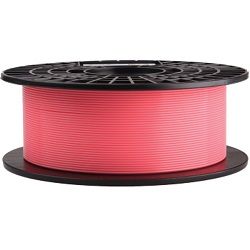


CoLiDo 3D Printer Filament
CoLiDo is a 3D printing brand from the Print-Rite Group, producing filament designed for desktop FDM printers.
Ink Depot stocks CoLiDo ABS and PLA filament in 1.75mm diameter, 1kg spools, in a range of colours.
All spools are compatible with any FDM 3D printer that accepts 1.75mm filament, which covers the vast majority of desktop printers on the market.
Australia-wide delivery with free shipping on orders over $99.
ABS Filament
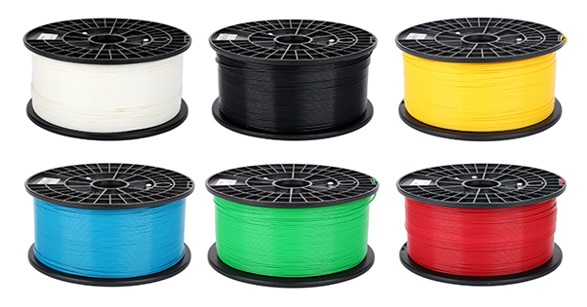
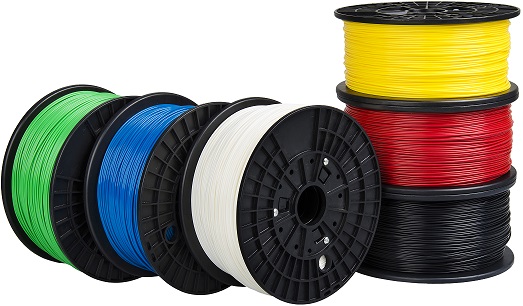
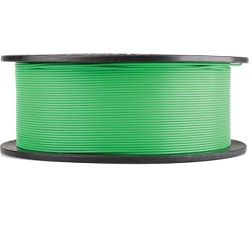
Available in: Black, Blue, Green, Red, White, Yellow
ABS (Acrylonitrile Butadiene Styrene) is a durable, impact-resistant thermoplastic suited to functional parts, enclosures, and objects that need to withstand heat or physical stress.
CoLiDo ABS has a dimensional accuracy of ±0.03mm and is formulated for consistent extrusion with minimal clogging.
Recommended print settings: Nozzle temperature 220–250°C.
A heated print bed is strongly recommended (80–110°C) to prevent warping.
Printing in an enclosed printer or draft-free environment gives the best results with ABS, as rapid cooling can cause layer separation.
PLA Filament
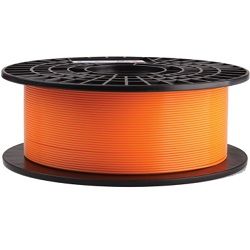
Available in: Orange, Pink, Purple
PLA (Polylactic Acid) is made from plant-based materials, making it biodegradable and one of the most widely used 3D printing filaments.
It produces prints with a smooth, glossy surface finish and vivid colour retention.
CoLiDo PLA has a dimensional accuracy of ±0.03mm and is non-toxic and low-odour during printing.
Recommended print settings: Nozzle temperature 190–210°C.
No heated print bed required, though a bed temperature of 60–70°C improves first-layer adhesion.
Easier to print than ABS, less prone to warping and suitable for open-frame printers.
ABS vs PLA: Which Should You Use?
Choose PLA for models, display pieces, prototypes, and objects that won't be exposed to sustained heat or heavy mechanical load.
Easier to print, better colour vibrancy, and no heated bed required.
The better starting point for beginners.
Choose ABS for functional parts, mechanical components, or anything that needs to handle heat above 60°C or withstand repeated stress.
Requires a heated bed and a more controlled print environment, but produces tougher, more heat-resistant results.
Compatibility
Both CoLiDo ABS and PLA filaments are 1.75mm diameter and compatible with all FDM 3D printers using 1.75mm filament, including popular desktop models from Creality, Bambu Lab, Prusa, Ultimaker, FlashForge, and CoLiDo's own printer range.
Always verify your printer's recommended nozzle temperature range against the settings above before printing.
Why Ink Depot Is The Best Choice To Shop 3D Filaments?
Ink Depot has been supplying consumables to Australian homes and businesses for over 20 years.
CoLiDo filament is dispatched from distribution centres in Sydney, Melbourne, Brisbane, Perth, and Adelaide, Gold Coast, to name a few.
Free shipping on orders over $99 and a 90-day return policy on all purchases.
Additionally, our customer support experts are always there to help you!
Practical Printing Guidance
First layer adhesion is the most common problem with both materials. If your first layer isn't sticking cleanly, the two most frequent causes are bed levelling and bed surface condition. A well-levelled bed with a clean surface, wiped with isopropyl alcohol before each print, resolves most adhesion issues before you start adjusting temperatures or speeds.
ABS warps at the edges on large flat prints. This is the material's nature, not a filament defect. A brim of 5–10mm around the base of the print significantly reduces warping by anchoring the edges. An enclosure or even cardboard around the printer to reduce drafts, makes a material difference on prints wider than 100mm.
PLA is the right default for most users. If you're not sure which to use, start with PLA. It's easier to dial in, forgiving of minor print setting variations, produces consistent colour, and works well on open-frame printers without enclosures. Reserve ABS for specific use cases where heat resistance or toughness is genuinely required.
Colour consistency within the CoLiDo range is reliable. Each colour variant, orange, red, blue, and so on, has been formulated to a consistent pigment standard, which matters if you're printing multi-part assemblies where parts need to match visually across different print sessions.
Stringing on PLA is usually a retraction issue, not a filament issue. If you're seeing thin strands between parts of a print, increase retraction distance (typically 4–6mm for Bowden setups, 1–2mm for direct drive) and lower print temperature by 5°C increments before assuming the filament is at fault.
Honest Limitations
CoLiDo filament is a reliable mid-range product well suited to general-purpose printing. It is not marketed as an engineering-grade or specialty filament, if your application requires extreme dimensional precision, high-temperature resistance above 100°C, chemical resistance, or food-safe certification, a specialist filament outside this range would be the appropriate choice.
For hobby printing, prototyping, functional household parts, and educational use, CoLiDo ABS and PLA perform consistently and offer good value at the 1kg price point.
Frequently Asked Questions
1. What's the spool weight, is it 500g or 1kg?
All CoLiDo filament spools stocked at Ink Depot are 1kg.
ABS spools are priced at $30.43 and PLA spools at $32.62 per kilogram.
2. CoLiDo filament work in my printer?
If your printer uses 1.75mm FDM filament, yes.
CoLiDo ABS and PLA are universally compatible with all 1.75mm FDM desktop printers.
The two things to check are that your printer's nozzle can reach the required temperature (190–210°C for PLA, 220–250°C for ABS) and, for ABS, that your printer has a heated bed.
3. Why is ABS cheaper than PLA if it's tougher?
Raw material cost, not quality.
ABS is a petroleum-based plastic that has been manufactured at industrial scale for decades : the base material is inexpensive.
PLA uses plant-derived feedstocks (typically corn starch or sugarcane) which carry a modest cost premium.
Neither is inherently "better" : they're suited to different applications.
4. How should I store unused filament?
Both ABS and PLA are hygroscopic : they absorb moisture from the air, which causes bubbling, stringing, and surface defects during printing.
Store opened spools in a sealed bag or airtight container with silica gel desiccant packs.
If filament has been exposed to humidity and prints poorly, drying it in a filament dryer or low-temperature oven (50–65°C for PLA, 65–80°C for ABS) for 4–6 hours typically restores print quality.
Explore Our Range Popular Products
Other products you may interested in


