
Which Permanent Marker Works Best on Plastic, Metal, Glass and Fabric?

Which permanent marker works best comes down to the surface and what the mark will face afterwards. Indoors, a standard solvent-based permanent marker handles most plastics, bare metal and glass. Choose by exposure, not by the word "permanent" on the barrel.
Washable fabric needs a laundry marker. Dark or oily metal, and metal that lives outdoors, is better served by an oil-based paint marker. On glass and other smooth surfaces, permanent ink stands up to water but can often be removed with alcohol.
Quick Answer: Match the Marker to the Surface
Find your surface in the chart and read across. The last column covers the prep or the catch for each one, so don't skip it.
Once you know the type, you can browse our permanent markers for everyday and industrial marking.
| Surface | Marker type | Before you start |
|---|---|---|
| Porous plastic and card | Standard permanent marker | Ink soaks in, so marks usually hold well. |
| Smooth hard plastic | Standard permanent marker | Wipe off dust and handling oils first. |
| Flexible tubs and bottles | Paint marker or a label | Patch-test a small area. Some flexible plastics bead ink. |
| Bare metal, indoors | Standard permanent marker | Degrease first. |
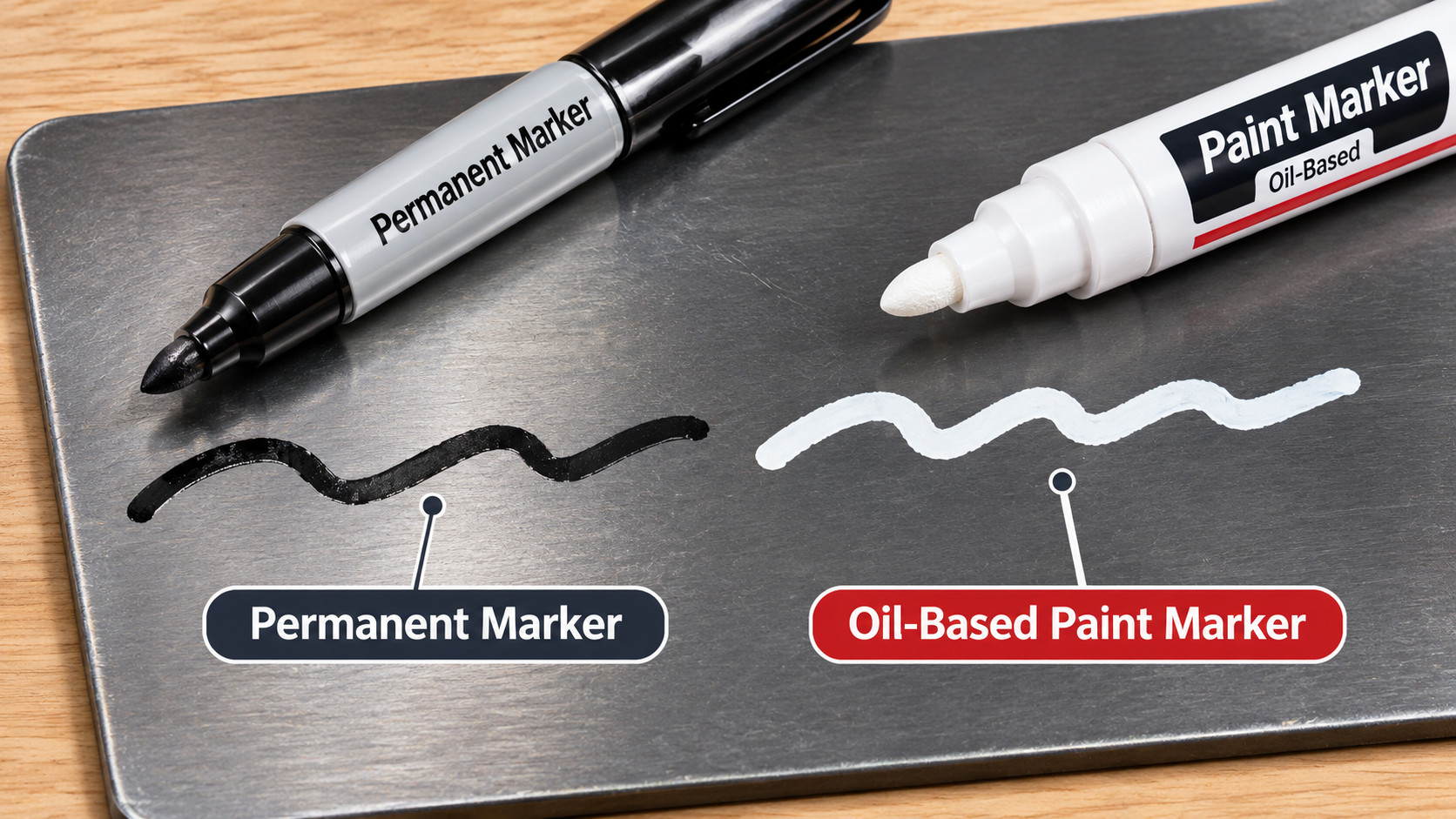
| Dark, oily or outdoor metal | Oil-based paint marker | Degrease. Standard ink can vanish on dark metal. |
| Glass (labels) | Standard permanent marker | Expect it to come off with alcohol when you relabel. |
| Glass (decoration) | Paint marker | Seal according to the maker's instructions. |
| Washable fabric | Laundry marker | Write on a care label or tag and let it dry before washing. |
| Decorative fabric | Fabric or paint marker | Heat-set according to the maker's instructions. |
Permanent vs Waterproof: Why "Permanent" Ink Can Still Come Off
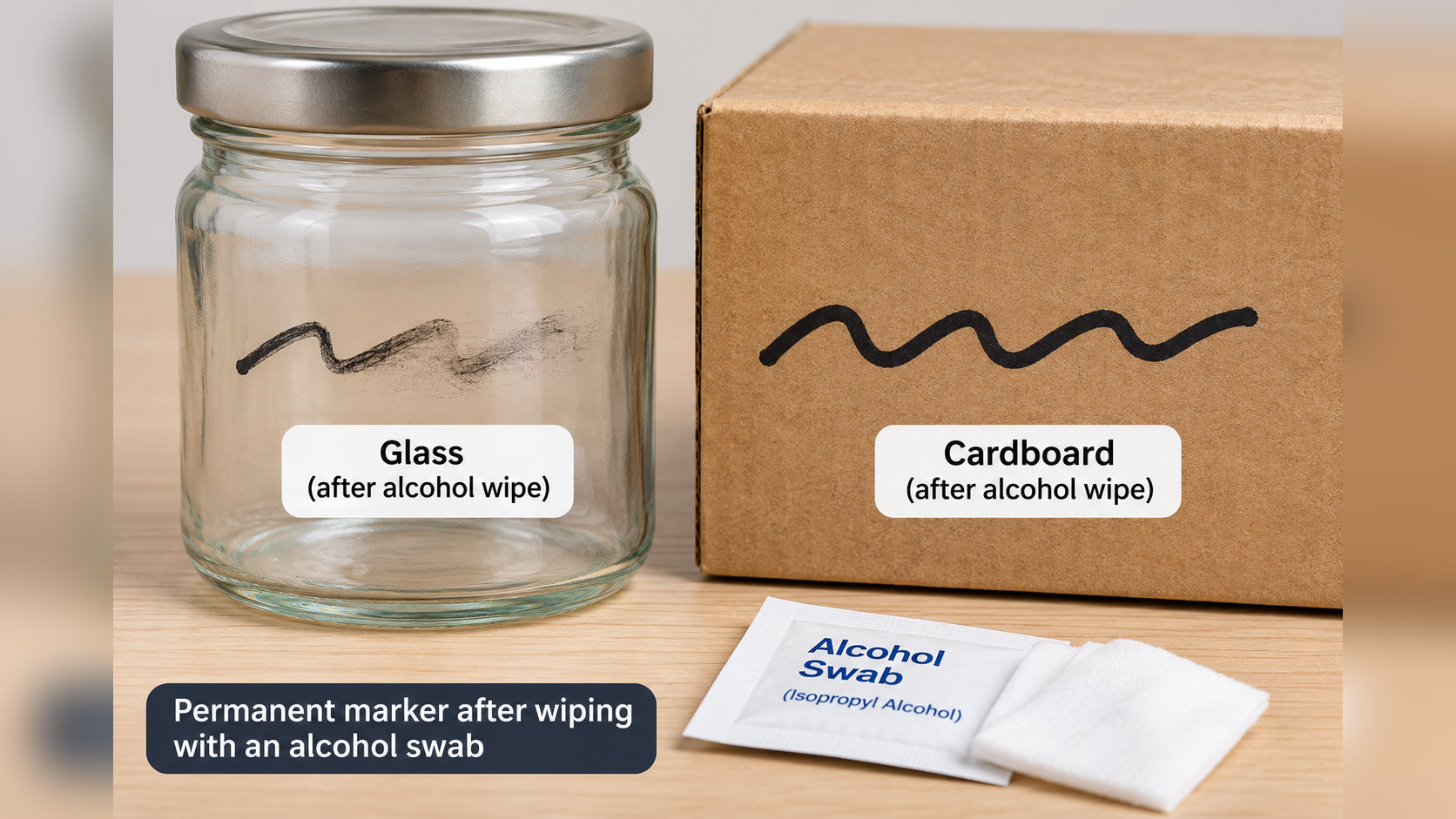
On a marker barrel, "permanent" tells you how the ink behaves on the right surface, and that's all it tells you. Cardboard, untreated wood and fabric are porous, so the ink soaks into the fibres and stays there. Glass is the opposite. So are glazed ceramic and smooth metal. With nothing to soak into, most of the ink dries on top, where it resists water once dry but can often be lifted with a solvent such as rubbing alcohol.
So a label on a glass jar can disappear under an alcohol swab while the same marker on a cardboard box won't budge. The marker hasn't failed in either case. The surface changed the result.
The wording on packs doesn't help much. Brands use "permanent", "waterproof" and "water-resistant" loosely and rarely define them. Staedtler describes its Lumocolor permanent markers as smudge-proof and waterproof, and says they write on almost all surfaces. Treat "waterproof" as meaning the mark holds up to water once dry. Whether it survives cleaning is a separate question, and an alcohol wipe on a test spot will answer it.
Plastic
Hard plastic is the easy case. Storage crates, folders, cable tags, equipment casings and plastic sleeves usually take a crisp, water-resistant mark from a standard solvent-based permanent marker, as long as the surface is clean. Grime is the catch. Ink grips dust and handling oils instead of the plastic, then rubs off along with them, so wipe the surface down first.
Softer, flexible plastics are where people get caught out. Some of those used for tubs and bottles make ink bead into droplets, or let it rub off once dry, even from a brand-new marker. Run the quick test further down this page before you label a whole batch. If the ink won't hold, try an opaque paint marker (test that too) or switch to a label.
Texture works in your favour, because ink settles into a matte or porous finish instead of sitting on top. How the item gets handled matters just as much. A crate parked on a shelf barely wears its label, whereas a tub that's stacked and wiped down every day will rub a mark away much sooner. For mixed plastics around the house or office, shop permanent markers by brand. The range covers Sharpie, Artline, Staedtler Lumocolor and uni Prockey.
Metal
Tools, shelving, toolboxes and steel parts in a dry storeroom don't need anything special, and a standard permanent marker will usually do. What it can't do is write through cutting oil or fingerprints. A mark made over either wears away as the residue does, so degrease the spot before you start. Workshop dust has the same effect.
Dark steel is harder. Black ink almost vanishes on it, coloured ink looks faint, and an oily or weathered surface makes things worse. This is where an opaque oil-based paint marker earns its place, because it lays down paint that stays readable. uni-ball describes its uni Paint PX-20 as oil-based, water-resistant, heat-resistant and fade-proof, and lists metal, glass, plastic and fabric among its surfaces.
Coated metal is its own case. Paint and powder coat don't always behave like bare steel, and nor do polished finishes, so a marker that grips one may not suit another. Try it somewhere out of sight first.
Brands also sell ranges aimed at metal, Sharpie Metal among them. For site gear or tools that ride around in a ute, read what the pack says a marker is rated for before you trust it.
Glass
Labelling glass and decorating it are two separate jobs. For labels on storage jars, sample bottles and glass shelving, or a date on the outside of a jar of preserves, use a standard permanent marker. The ink sits on the surface, so when the contents change, alcohol takes it off ready for a new label.
Decoration calls for a paint marker, which gives opaque, bright colour that standard ink can't match. Some can be sealed for extra durability, though the method varies from one product to the next. If you're using POSCA, how to seal POSCA on glass sets out the steps. For anything else, go by the instructions that came with the marker.
Important: Don't use permanent or paint markers anywhere that touches food or mouths. Cup rims and chopping boards are off limits, as is the inside of any container, and keep markers off skin too. "Non-toxic" on a label doesn't mean food-safe, so write on the outside of the item, away from the drinking edge, or use a label.
Fabric
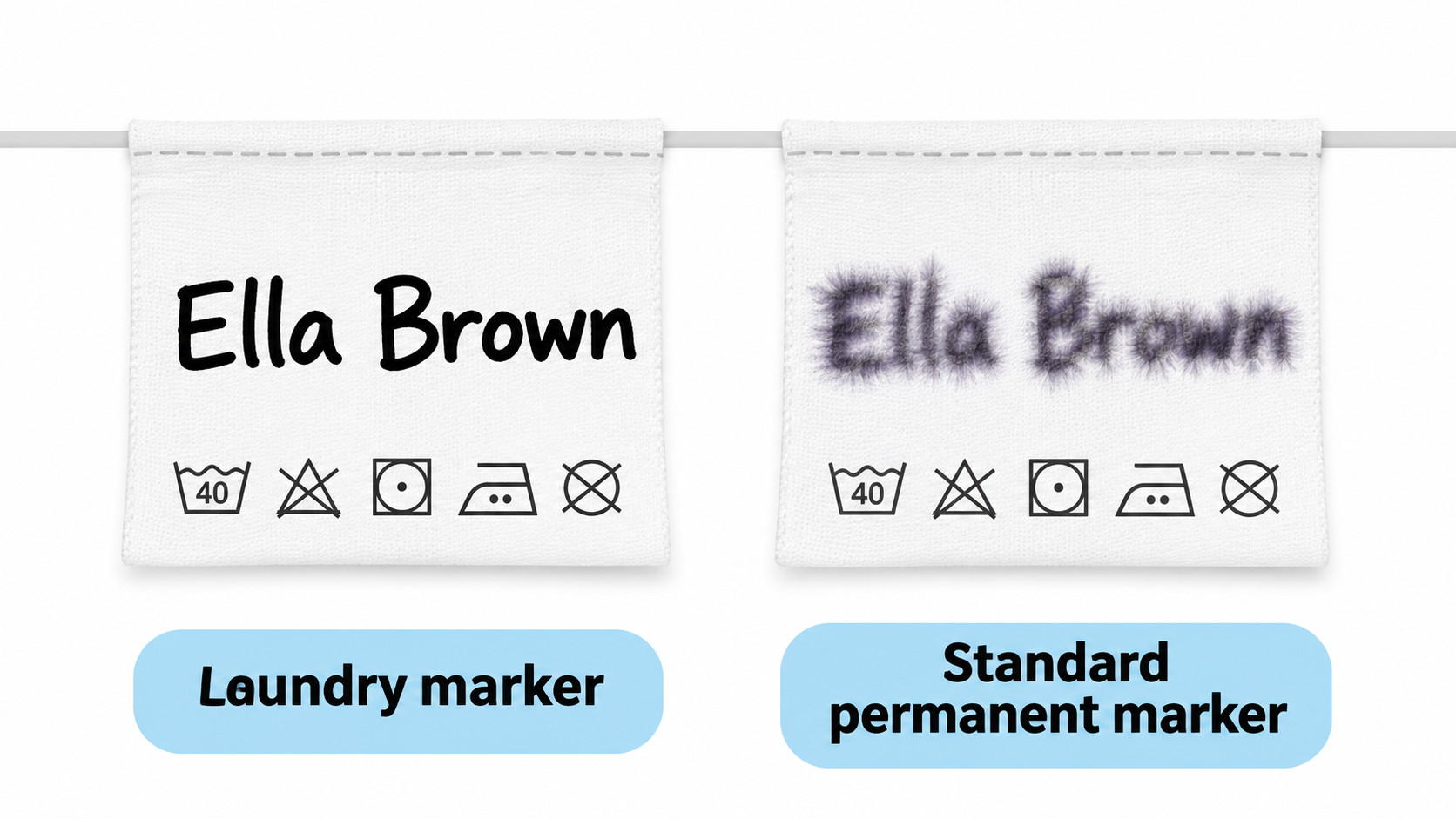
Write a name on a school jumper with an ordinary permanent marker and it will look fine at first. The trouble starts in the wash. On woven and knitted fabric the ink can feather along the fibres into fuzzy edges, and after repeated washing the name can fade. For a one-off costume or a drop sheet, that hardly matters.
Anything that goes in the machine needs a laundry marker, which is made for fabric and for washing. Staedtler says its Lumocolor laundry marker survives multiple washes, and our laundry markers for school uniforms include Artline 750. Washing guidance differs between products, so read the pack on the one you buy.
Decorating a T-shirt, a tote bag or a pair of canvas shoes is different again. A fabric or paint marker, heat-set the way its maker specifies, gives stronger colour that copes better with washing. If you're working with POSCA, see our walkthrough on heat-setting POSCA on fabric.
Where you write on a garment matters. A care label or plain tag takes ink far better than a stretchy or shiny patch, and a piece of card slipped underneath stops it bleeding through. The ink also needs to dry fully before the first wash, which is a good reason to label uniforms a few days before term starts in late January rather than the night before.
Outdoors, Heat and Handling: Making Marks Last
Start with the sun. Australian UV is strong enough to fade ink, and colour makes a difference: Staedtler rates only black and brown in its Lumocolor 317 permanent range as lightfast. A red or blue mark on a wheelie bin or garden tag may fade sooner, so use black for anything that lives outside. Don't take "waterproof" on the barrel to mean fade-resistant unless the maker actually says so.
Heat comes next. Gear left in a hot car or ute can sit at high temperatures for long stretches, and a shed is little better. If that's where it lives, pick a marker its maker rates for heat. uni-ball, for one, describes the PX-20 paint marker as heat-resistant.
Wear is slower. Hands and gloves, and the tools that knock against them, rub marks away over time. Put marks clear of grip points, and touch up anything important every so often. In Queensland, the NT and northern WA, humidity adds one more thing to plan for, because paint markers can take longer to dry in humid weather. Leave extra time before handling.
For the garden, Staedtler makes a marker it describes as weatherproof and lightfast, and other brands sell outdoor ranges. Sometimes, though, ink is the wrong answer. A mark that has to last years outside, or sit on a wet, oily surface, may work better as a durable label. We compare the options in which labels to use for shipping, colour dots and heavy-duty jobs.
How to Test a Marker Before a Big Labelling Job
Before you commit to a stack of tubs or a drawer full of uniforms, try the marker on one spot.
- Read the pack: Does the maker list your surface and the conditions the mark will face? If not, this test matters more.
- Pick a test spot: A hidden area or an offcut is ideal. Clean off any dust or oil and make sure it's dry.
- Mark and wait: Let the ink dry fully, following any heat-setting or sealing instructions that apply.
- Rub and wipe it: Your thumb and a damp cloth will show how it copes with handling. With fabric, use a scrap or a hidden seam, not the front of the garment.
- Decide: If the ink beads up, smears or lifts at the first rub, switch to a paint marker, a laundry marker or a label.
What a quick test won't show is how the mark looks after months of sun or dozens of washes. For that, you're relying on what the maker rates the product for.
Weighing up paint markers more generally? Our guide to choosing POSCA pens and paint markers goes into more depth.
Frequently Asked Questions
Is Sharpie permanent on fabric?
A general-purpose Sharpie will mark fabric, as will other standard permanent markers, but none of them is made for the wash. Over repeated washing the ink can feather into the weave and fade. For school uniforms, hats and bags that go through the machine, a laundry marker is the better choice.
How do I get permanent marker off plastic or glass?
Try rubbing alcohol on a soft cloth. On smooth, non-porous surfaces it often lifts permanent ink, though results vary between surfaces and inks, so start on a hidden spot. Porous or textured plastic is harder, because the ink has soaked in and may not come out completely.
Which marker colour lasts longest outdoors?
Black is the safest bet. Staedtler rates only black and brown in its Lumocolor 317 permanent range as lightfast, so other colours may fade sooner in strong sun. Ratings differ between ranges, so look for one on the marker you're using.
Can I use a permanent marker on a mug or drink bottle?
Only on the outside. Keep marks off anything that touches food or mouths, which rules out the rim and inside of a mug, cup or drink bottle. To name a drink bottle, write on the outside well away from the drinking edge, or use a label.
Why won't my marker write on this plastic?
There are two likely culprits: a greasy or dusty surface, or a plastic that resists ink. Some flexible plastics used for tubs and bottles make ink bead instead of grip. Wipe the area with a little alcohol, let it dry and have another go. If it still beads, patch-test an opaque paint marker or use a label.
Should I use a paint marker or a permanent marker?
It depends on the job. For quick labels on light or clear surfaces, and for small writing, a permanent marker is easier to control. Paint markers put down an opaque coat that shows up on dark surfaces, and the oil-based ones cope better outdoors and in the wet.
How long should permanent marker dry before handling or washing?
Long enough to be completely dry before you handle it or get it wet, otherwise fresh ink can smudge or lift. Paint markers may take longer, and some fabric and glass projects need heat-setting or sealing on top of that. Times differ from product to product, so the instructions on yours are the best guide.


Any comments?